
How to Create a 5W2H Action Plan (Step-by-Step + Free Template)
How to Create a 5W2H Action Plan (Step-by-Step Guide + Example)
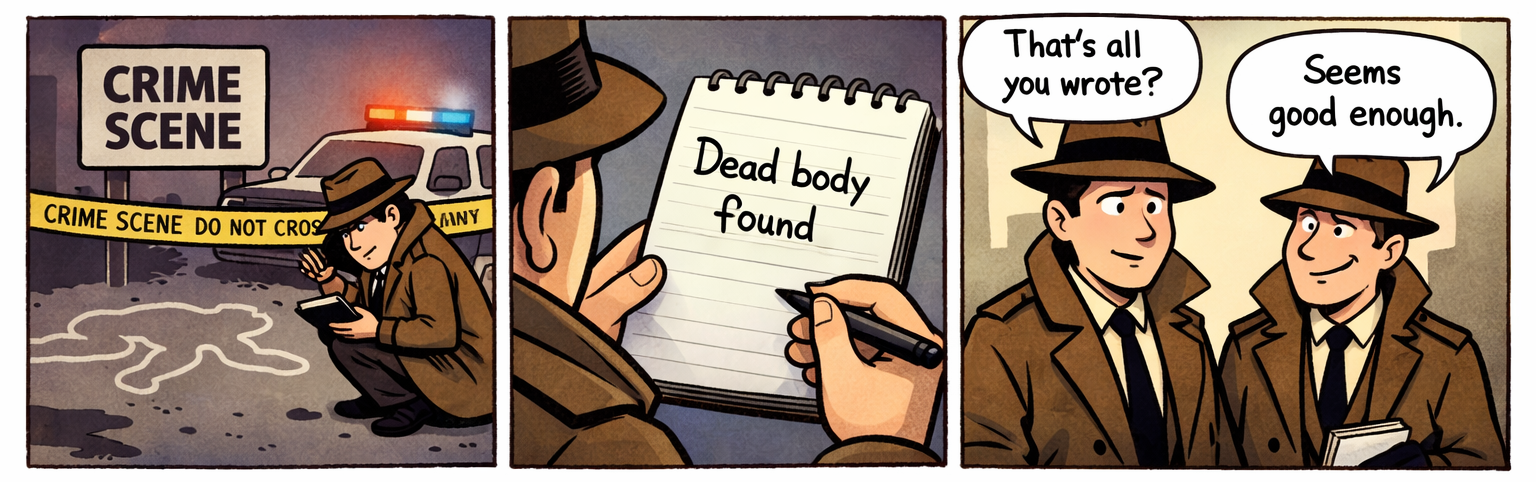
Imagine a detective arriving at a crime scene.
He looks around, takes notes, and writes:
Dead body found.
That’s it.
No timeline.
No suspects.
No cause.
No witnesses.
That’s how most companies document problems.
5W2H exists to prevent exactly that.
What Is 5W2H?
Toyota popularized many practical problem-solving tools inside Lean. 5W2H is one of the simplest.
It stands for:
-
What
-
Why
-
Where
-
When
-
Who
-
How
-
How Much
It’s a structured way to turn “we should fix this” into a concrete action plan with ownership and deadlines.
If you want the full background, read the 5W2H definition here.
This guide focuses on how to actually use it.
When Should You Use 5W2H?
Use 5W2H when:
-
A problem has been identified and you need execution, not more discussion
-
Ownership is unclear
-
Tasks keep slipping
-
You’ve done root cause analysis and now need implementation
-
A meeting ended with “someone should fix this”
5W2H is not for brainstorming.
It’s for turning decisions into action.
Step-by-Step: How to Fill Out a 5W2H Action Plan
Step 1 – Define the “What”
Be painfully specific.
Bad:
Improve delivery performance.
Good:
Reduce late deliveries from 18% to below 5%.
The “What” should describe a clear action or measurable change.
If it’s vague, the whole plan collapses.
Step 2 – Clarify the “Why”
This keeps the action grounded.
Examples:
-
Customer complaints increased 32%
-
Overtime costs are rising
-
SLA penalties apply
If the “Why” is weak, execution will be weak.
Step 3 – Define the “Where”
Where does this apply?
-
Specific production line
-
Warehouse area B
-
All export orders
-
Specific product family
This prevents scope creep later.
Step 4 – Set the “When”
No deadlines = no action.
Be specific:
-
Start date
-
End date
-
Milestones if needed
Avoid:
ASAP
Q3
Soon
If there’s no calendar date, it won’t happen.
Step 5 – Assign the “Who”
One name.
Not:
-
Operations
-
The team
-
Logistics
One accountable person.
That person can involve others — but ownership must be clear.
Step 6 – Define the “How”
This is the execution method.
Examples:
-
Update routing logic in ERP
-
Add 2-hour buffer before dispatch
-
Implement visual board for order status
The “How” prevents interpretation errors.
Step 7 – Estimate “How Much”
This can be:
-
Budget
-
Man-hours
-
Investment
-
Cost impact
Even a rough estimate forces seriousness.
Example: 5W2H Action Plan (Realistic Case)
Problem: Late deliveries increased over the last 3 months.
| Field | Example |
|---|---|
| What | Reduce late deliveries from 18% to <5% |
| Why | Customer complaints up 32%, risk of lost contracts |
| Where | Export orders from Warehouse B |
| When | Implement by March 30 |
| Who | Logistics Manager – Anna Svensson |
| How | Introduce dispatch cut-off time + daily priority review |
| How Much | Estimated 40 man-hours + €1,500 process adjustments |
Notice:
-
Clear metric
-
Named owner
-
Real deadline
-
Defined method
This is what makes 5W2H powerful.
Download the Free 5W2H Excel Template
We created a simple, practical Excel template based on this structure.
✔ Clear columns
✔ Easy to use in meetings
✔ No unnecessary fluff
✔ Ready for immediate implementation
Download it here and start using it today.
Common Mistakes to Avoid
1. Writing goals instead of actions
“Improve communication” is not an action.
2. No owner
Shared responsibility usually means no responsibility.
3. No measurable outcome
If you can’t measure it, you can’t verify it.
4. Using it as documentation only
5W2H is not a reporting tool.
It’s an execution tool.
5. Filling it out alone
It works best when created with the people involved in the work.
How 5W2H Fits Into Lean
5W2H is often used after:
It sits in the “Do” phase — where decisions turn into execution.
Without structured action planning, most improvement initiatives die in PowerPoint.
5W2H prevents that.
Final Thoughts
5W2H is simple by design.
That’s its strength.
It forces clarity:
-
What are we doing?
-
Why are we doing it?
-
Who is responsible?
-
When will it be done?
No slides.
No buzzwords.
Just execution.
Start small. Use the template. Try it on one real problem this week.
You’ll immediately see the difference.