
Customer Complaint: What To Do When Issues Keep Coming Back.
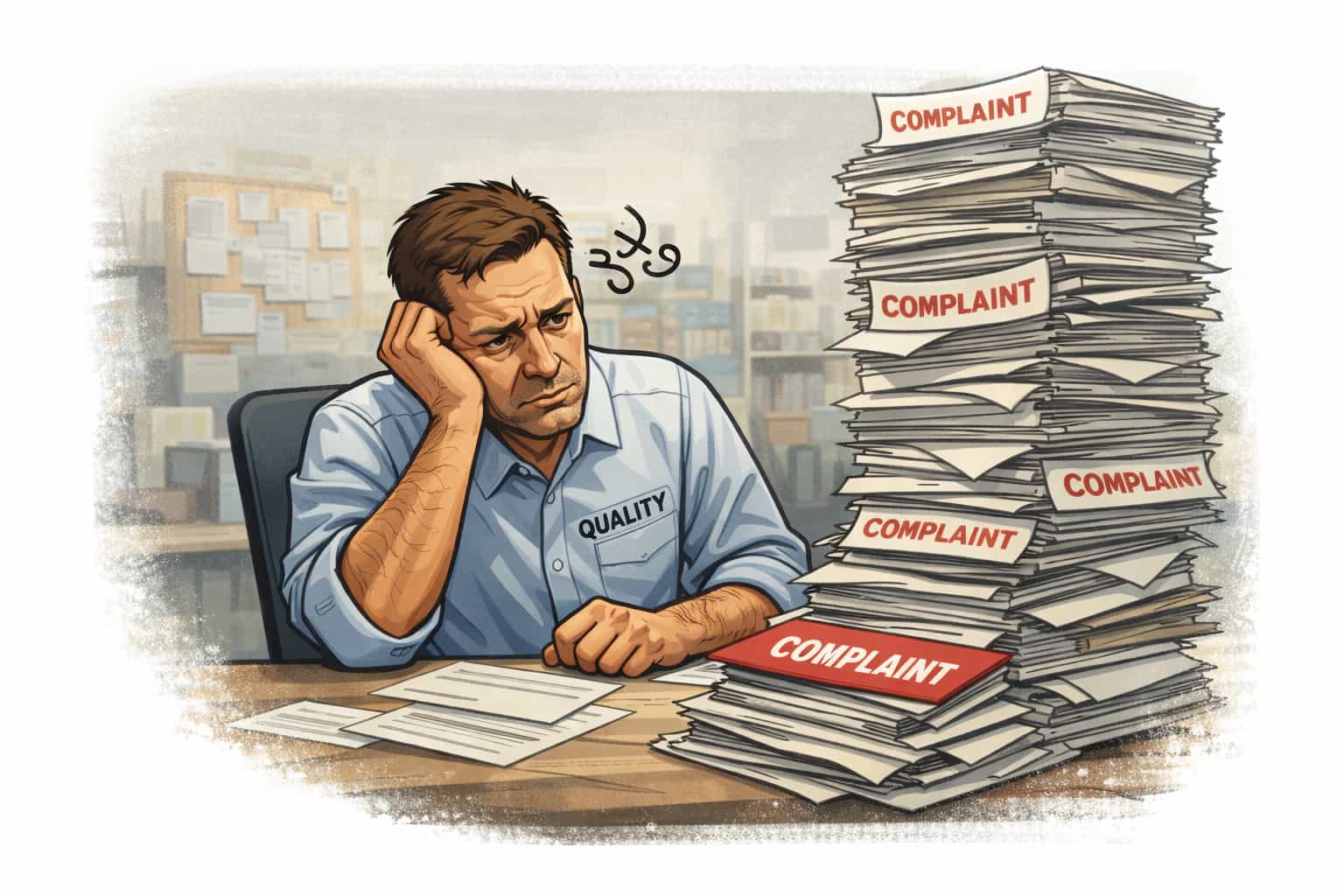
You get a complaint.
You fix it.
You move on.
Then it comes back.
That’s the moment it stops being a complaint — and starts being a system problem.
This guide walks through what to actually do when customer complaints keep repeating, using a real-world style case from production and logistics.
No theory. Just how it plays out in real life.
The Situation: “Accessories Missing at Delivery”
A customer reports that a special accessory is missing from their delivery.
Not a standard part.
A specific add-on ordered separately.
It shouldn’t happen.
The packing operators insist they followed instructions.
Still, it happened.
So what do most companies do?
They tighten control.
The Typical (Wrong) Reaction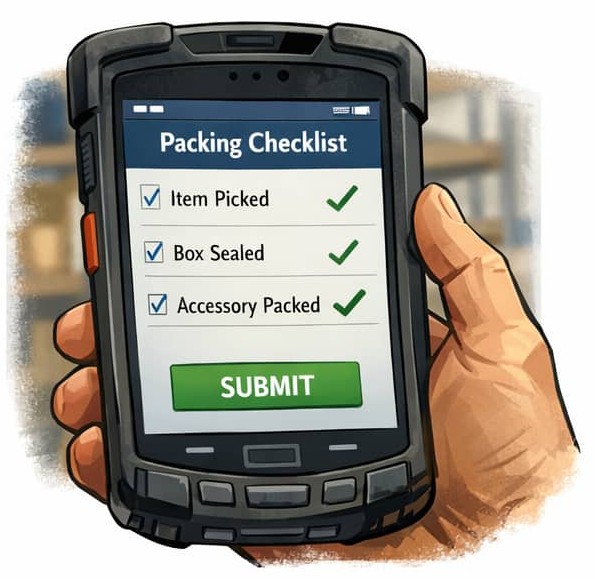
Here’s how it usually unfolds:
-
A digital checklist is introduced.
-
Operators must confirm accessories are packed.
-
Photos are required before shipment.
-
Meetings are held about “the importance of following instructions.”
-
Quality checks the checklist and points out missed confirmations.
-
Operators are reminded — again — to “be more careful.”
Time passes.
Another complaint.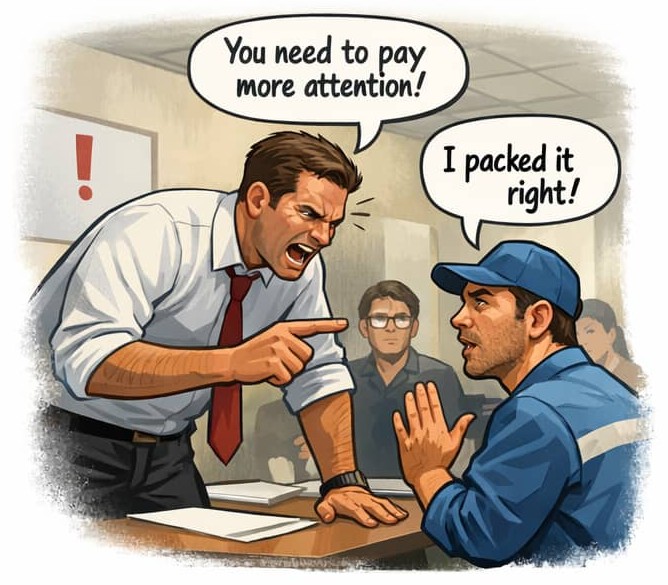
More meetings.
More frustration.
The pattern continues.
At this point, the issue isn’t missing accessories.
The issue is that the organization is treating symptoms.
Why Repeated Complaints Are a Red Flag
A single complaint can be noise.
Repeated complaints are a signal.
When something keeps coming back, it usually means one of three things:
-
The root cause was never identified.
-
The solution targeted the wrong level of the system.
-
The problem was defined too loosely.
Blaming operators is easy.
Fixing system design is harder.
What You Should Actually Do
When a complaint repeats, slow down.
Not to add more control — but to understand the problem properly.
Step 1 – Define the Exact Problem
Not: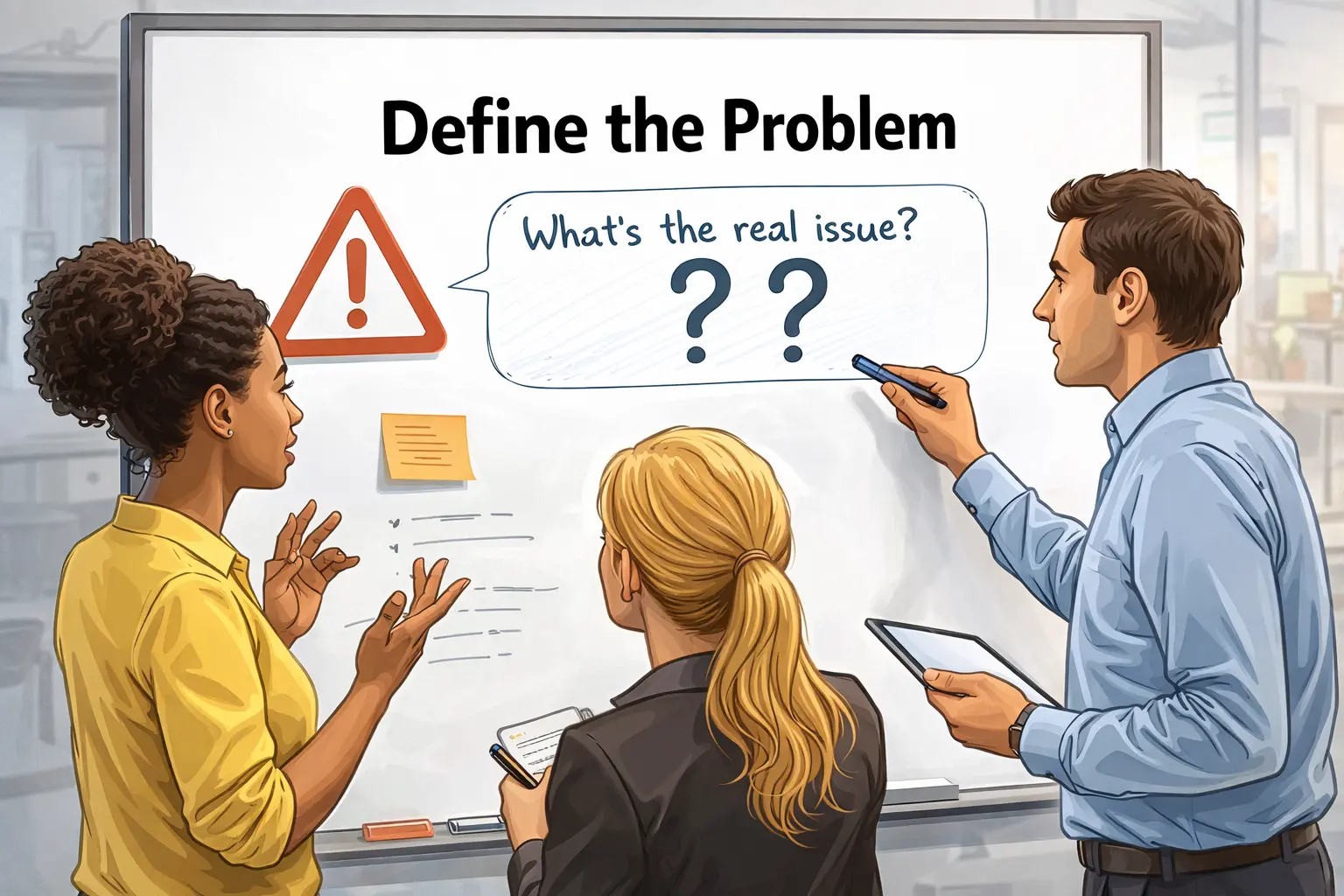
“Accessories missing.”
Instead:
-
Which accessory?
-
Which customer?
-
Which order type?
-
How often?
-
Since when?
Clarity reduces drama.
Step 2 – Look for Patterns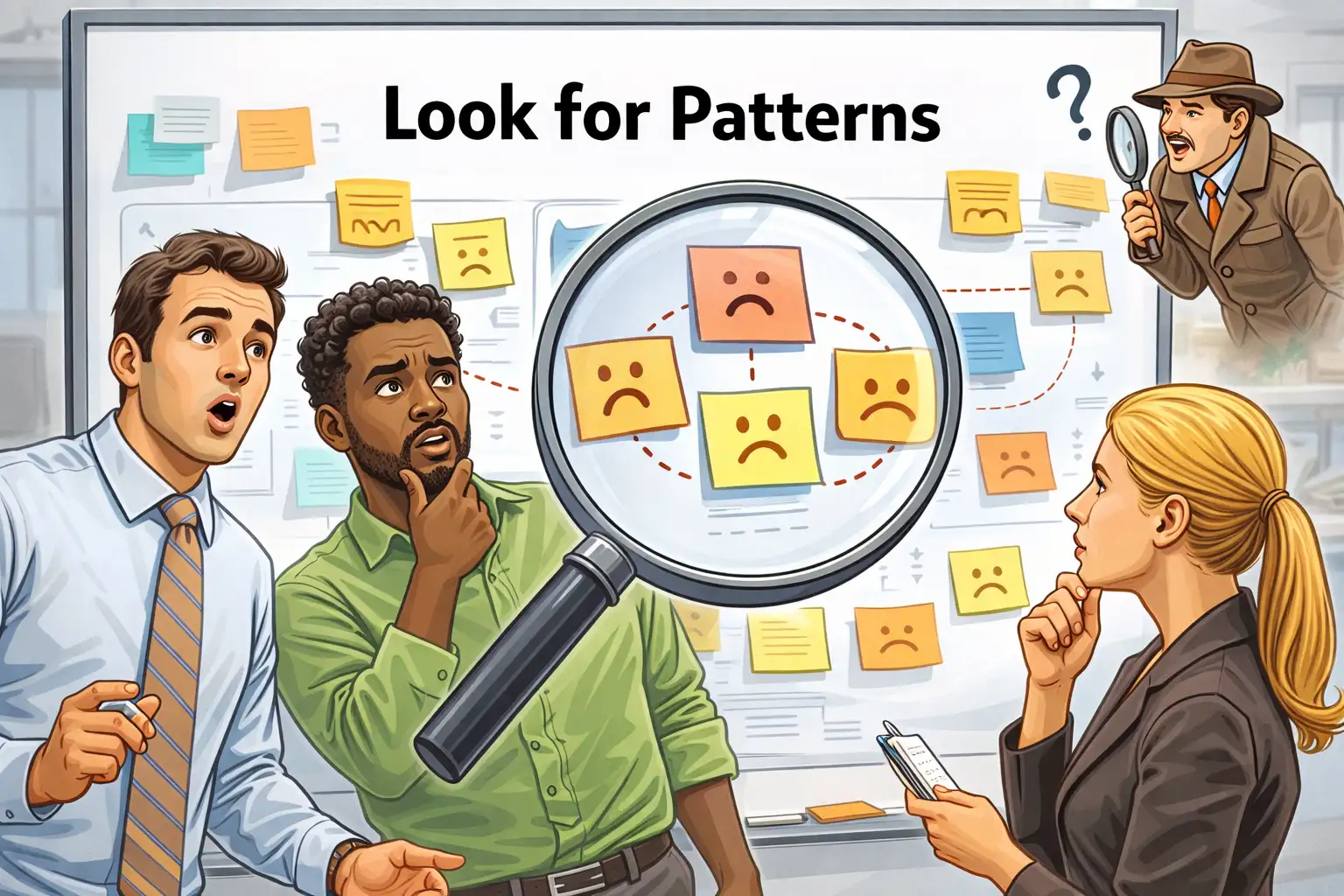
Check:
-
Is it always special-order accessories?
-
Does it happen on specific product families?
-
Is it linked to specific order types?
-
Does it only occur when orders are modified?
Patterns point toward process, not people.
Step 3 – Separate Symptom From Cause
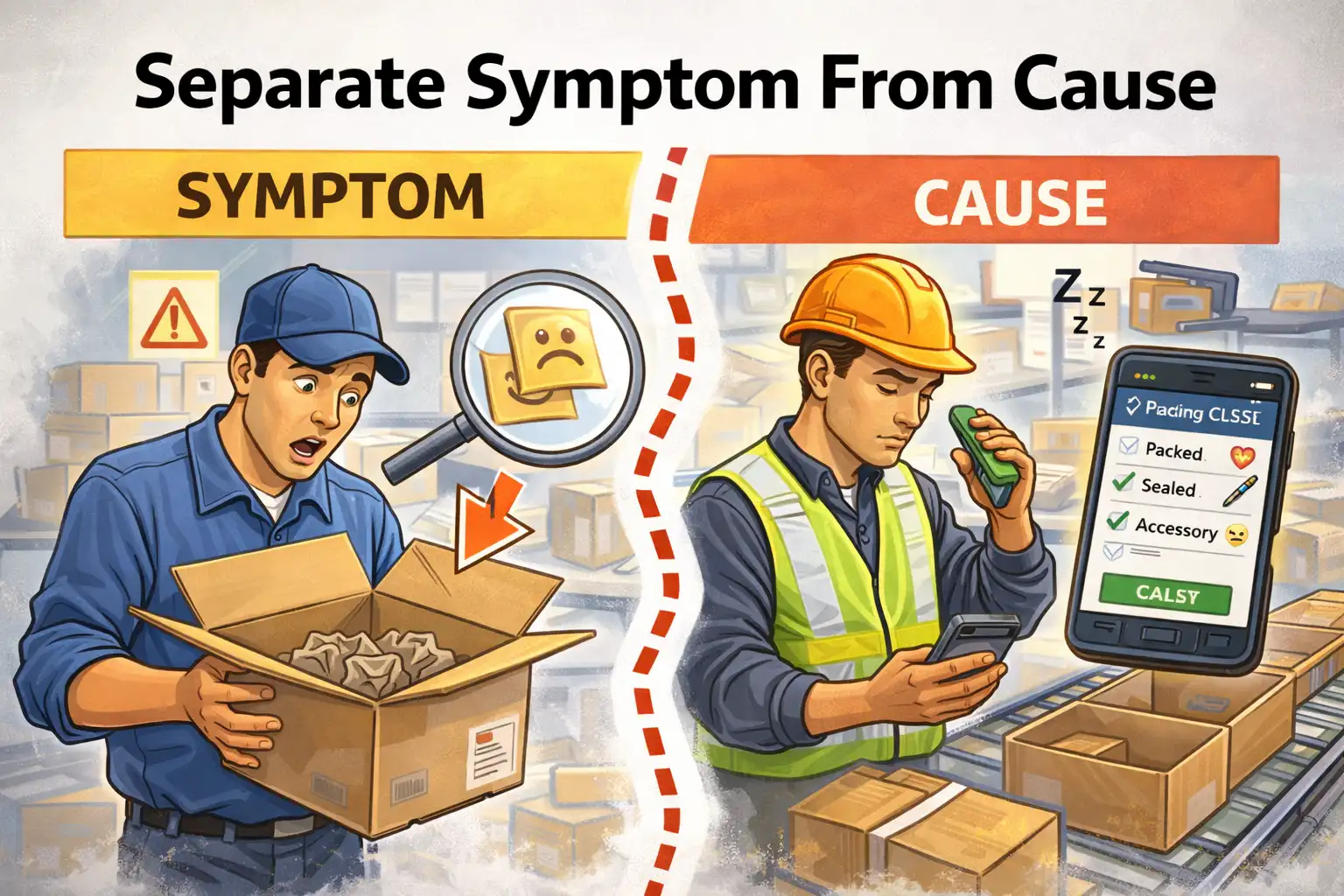
Missing accessory = symptom.
Possible causes could be:
-
Packing mistake
-
Picking error
-
Incorrect order entry
-
ERP visibility issue
-
Poor instruction design
Until you test these, you’re guessing.
And guessing leads to control layers instead of solutions.
Step 4 – Run a Proper Root Cause Analysis
This is where tools like: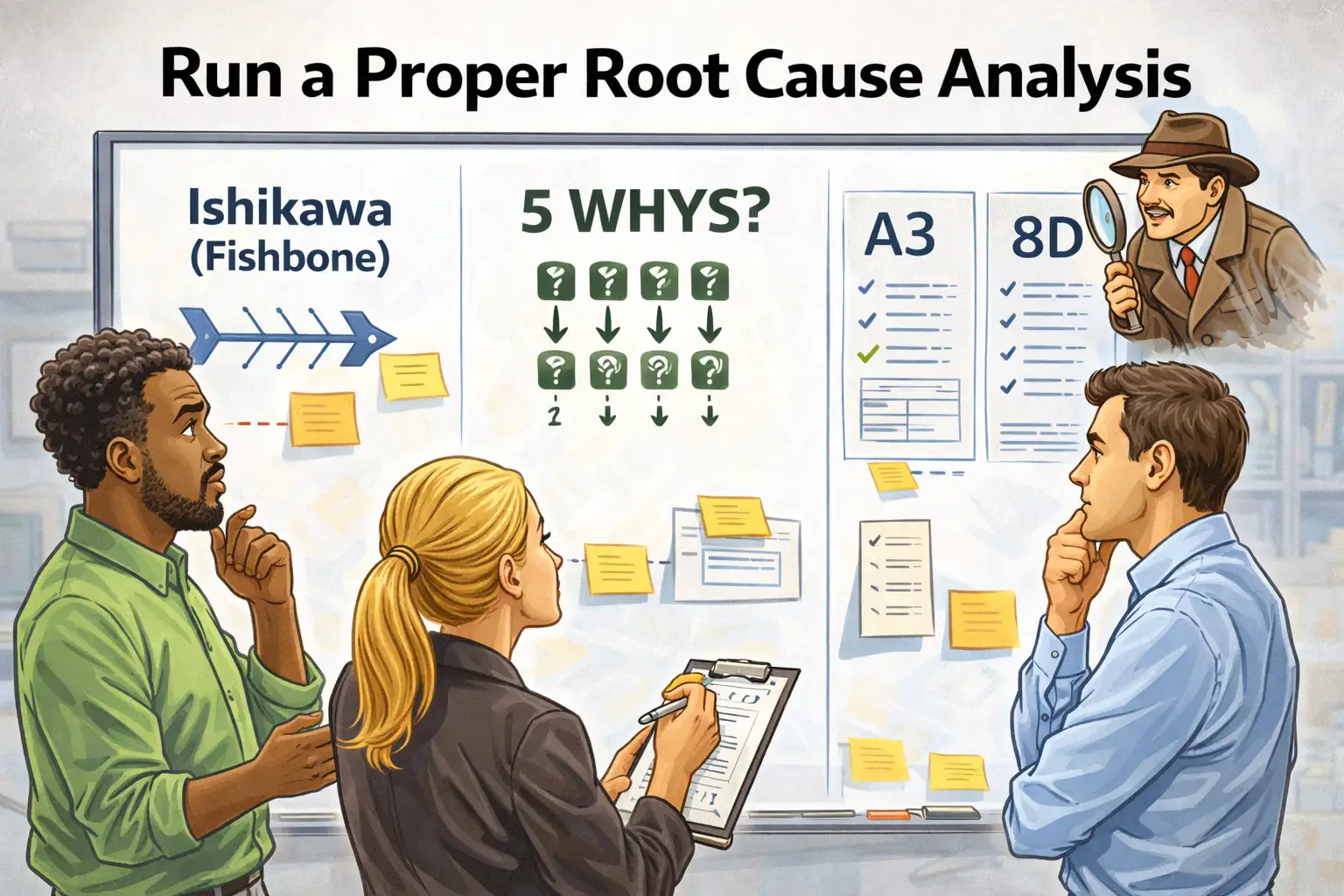
become useful.
Not because they’re fancy.
But because they force structured thinking.
Repeated complaints should trigger structured analysis — not more reminders.
What Actually Happened in This Case
After multiple complaints, multiple meetings, and a digital checklist rollout, someone finally asked a different question:
“What does the operator actually see in the system?”
When the order flow was reviewed, something became clear:
The accessory was entered incorrectly during order entry.
The system did not clearly display it in the picking/packing view.
Operators were packing exactly what the system showed them.
They were never missing the item.
The process was.
The digital checklist didn’t fix it because the checklist was verifying the wrong assumption.
Operators were blamed.
But the real issue was information design.
The Cost of Fixing the Wrong Problem
When complaints repeat and you attack the wrong cause, you get:
-
Increased tension between departments
-
Lower operator morale
-
Extra administrative work

-
More control layers
-
No actual improvement
And over time:
-
Customer trust erodes
-
Internal trust erodes faster
The hidden cost is cultural.
When Should You Escalate a Complaint?
Escalate to structured root cause analysis when:
-
The issue repeats
-
You’ve “fixed it” once already
-
Multiple roles are blaming each other
-
You’re adding control but not seeing results
-
The cost of the issue is growing
If it feels political, it’s probably systemic.
The Key Lesson
Repeated complaints are rarely about carelessness.
They’re usually about:
-
Process gaps
-
Information flow issues
-
System design flaws
-
Unclear responsibility boundaries
Blaming the last person in the chain is easy.
Understanding the chain is leadership.
What to Do Next
If you’re dealing with recurring complaints:
-
Define the problem precisely.
-
Verify the data.
-
Map the flow.
-
Run a structured root cause analysis.
-
Implement corrective action.
-
Standardize once verified.
That’s how you stop firefighting.
That’s how you stop the meetings.
That’s how you stop the same complaint from showing up next quarter.
Final Thought
A complaint is feedback.
A repeated complaint is a message.
If it keeps coming back, it’s not asking for more control.
It’s asking for deeper understanding.
And that’s where real improvement begins.